
← students
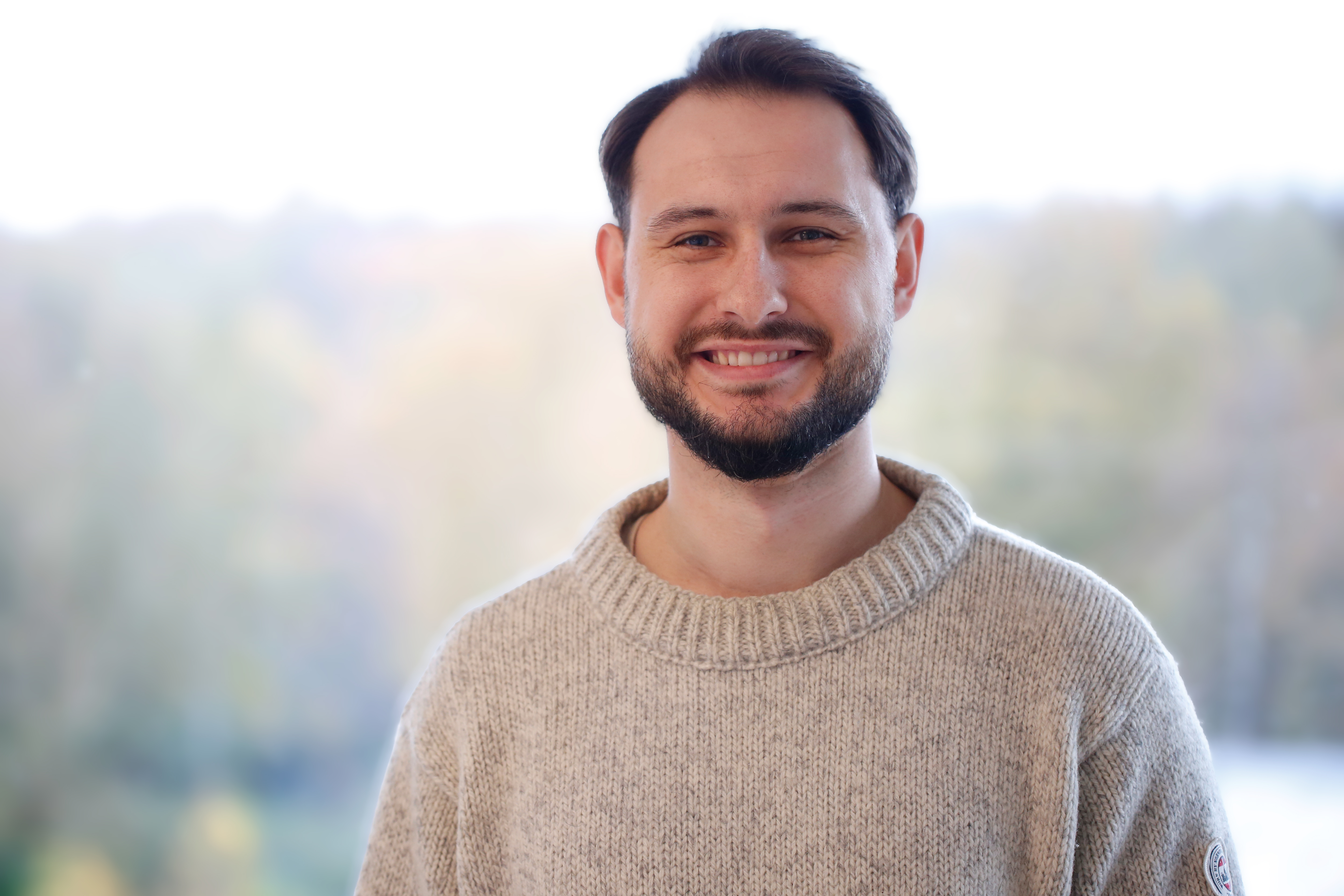
| First name: | Joel |
| Last name: | Bose |
| Country: | Germany |
Thesis Subject:Polar Microbiomes: Composition, Function and Connectivity Over Space and Time
| Education: | |
| 2019-2024 University of Bremen: M.Sc. Biochemistry and Molecular Biology | |
| Master Thesis at Alfred Wegener Institute Between Unicellular Worlds: Exploring the microalgal phycosphere regarding Gammaproteobacteria-associated siderophore biosynthetic gene expression and its influence on Chrysochromulina leadbeateri growth | |
| 2015-2019 University of Bremen: B.Sc. Biology | |
| Bachelor Thesis Isolation and characterization of Oryza sativa L. cv. Nipponbare roots associated microorganisms with plant-based media, R2A medium and changing oxygen parameters |
Scientific Interests and Goals:Ongoing changes in the polar oceans affect the entire ecosystem from sea ice and surface waters to the deep sea. Microbial communities play a vital role in ecosystem functioning by driving biogeochemical processes and biological interactions, yet their structure, function, and dynamics across environmental and spatio-temporal gradients remain poorly understood.
My doctoral project will focus on the composition, function and connectivity of microbial communities in the Arctic and Antarctic Oceans across seasonal and environmental gradients. Using ribosomal metabarcoding, I will assess the dynamics and stability of Arctic microbiomes in seawater and sea ice in the central Arctic Ocean across years. Integrating barcoding and metatranscriptomics will reveal depth and geographic signatures in taxonomic as well as metabolic structure, illuminate community-wide gene expression, and resolve patterns of microbial interaction and interdependence that shape biogeochemical cycles.
Finally, I will address the question of whether microbial communities in the Arctic Ocean exhibit common or unique trends in gene content and community composition compared to those found in the Antarctic Ocean. This bases on long-read metagenomes from year-round autonomous samplers in the Fram Strait and Weddell Sea.
In conclusion, I am aiming to contribute to a holistic picture of Arctic and Antarctic microbial communities and cryobenthopelagic coupling across spatio-temporal scales. Closing this gap is crucial to understand how polar microbes and biogeochemical cycles will respond to climate change.
My doctoral project will focus on the composition, function and connectivity of microbial communities in the Arctic and Antarctic Oceans across seasonal and environmental gradients. Using ribosomal metabarcoding, I will assess the dynamics and stability of Arctic microbiomes in seawater and sea ice in the central Arctic Ocean across years. Integrating barcoding and metatranscriptomics will reveal depth and geographic signatures in taxonomic as well as metabolic structure, illuminate community-wide gene expression, and resolve patterns of microbial interaction and interdependence that shape biogeochemical cycles.
Finally, I will address the question of whether microbial communities in the Arctic Ocean exhibit common or unique trends in gene content and community composition compared to those found in the Antarctic Ocean. This bases on long-read metagenomes from year-round autonomous samplers in the Fram Strait and Weddell Sea.
In conclusion, I am aiming to contribute to a holistic picture of Arctic and Antarctic microbial communities and cryobenthopelagic coupling across spatio-temporal scales. Closing this gap is crucial to understand how polar microbes and biogeochemical cycles will respond to climate change.